
cutting edge Physics AI
Noizend is building the physics-informed AI to measure, predict and eventually cancel low-frequency noise, the part of noise pollution that concrete, distance and regulation haven't been able to stop. This page is a high-level look at our mission, our progress and the team behind it.

Noise is a global problem.
We're engineering a solution.
Long-term exposure to environmental noise is now cited as a top environmental risk to health, and the hardest part to control is the low end. Below 200 Hz, sound travels for kilometres, bends around barriers and passes straight through the walls built to stop it.
We started Noizend to give consultants, operators and communities a defensible way to measure the noise, predict where it goes, and eventually cancel it, not with more concrete, but with physics AI, microphones and speakers delivering a technological solution.
One pipeline: measure, predict, cancel.
Noizend Shield ships as three products in sequence, each de-risking the next.
Noizend Analyse
Turns a short microphone survey into a full 20–500 Hz noise map of a site, evidence-grade data for regulators, councils and operators. Shipping shortly.
Noizend Predict
Forecasts the noisy periods before they happen, so operators can act ahead of a breach instead of reacting to a complaint.
Noizend Control
Active cancellation at the source and at the boundary, physics AI, microphones and speakers targeting the low frequencies passive measures can't stop.
A market being rebuilt around the low end.
Noise control has been a materials industry for a century, mass, insulation, distance. The physics-AI segment of that industry is where the growth is.
$8.2B
forecast size of the global active noise & vibration control market by 2030, up from $6.3B in 2026
27%
annual growth rate of Australia's energy storage systems market, Noizend's first target vertical
250GW+
global battery storage capacity passed in 2025. Every gigawatt is a new site with a noise problem
Figures from third-party market research (active noise & vibration control market sizing aggregated across multiple 2026 industry reports; Australian energy storage market sizing from Grand View Research / Mordor Intelligence; global BESS capacity from Rystad Energy), not Noizend's own projections.
The infrastructure that generates the most low-frequency noise (battery storage, data centres, ports, mining, renewables) is being built at a pace and a proximity to communities, it has never been built at before.
And the part of the noise control market built for that specific problem, active, AI-driven control, is growing roughly twice as fast as the traditional passive-materials market it sits inside.
The industry is built for a problem this isn't.
Noise control today is dominated by passive materials: barriers, enclosures, insulation. Below 200 Hz, that toolkit runs out of road.
Passive, static, modelled
Mass and enclosures sized for mid- and high-frequency noise. Designed once against a generic acoustic model, then left to do the same job regardless of how the source actually operates.
Active, adaptive, measured
Physics-informed AI built specifically for the 20–500 Hz band standard materials don't reach. Measures the real noise field, and can respond as conditions on site change.
Three products, one customer relationship.
Noizend sells into the same customer as it grows: the operator responsible for a site's noise compliance.
Analyse
Project-based: a measurement campaign and a defensible noise report, sold directly to site operators, councils and acoustics consultancies.
Predict
Recurring: ongoing monitoring and forecasting for sites that need continuous compliance evidence, not a one-off report.
Control, plus a channel
Noizend's MOU with AKA Acoustics gives a path to market through an established acoustics consultancy, alongside direct sales as Control moves from pilot to commercial deployment.
The people building it.
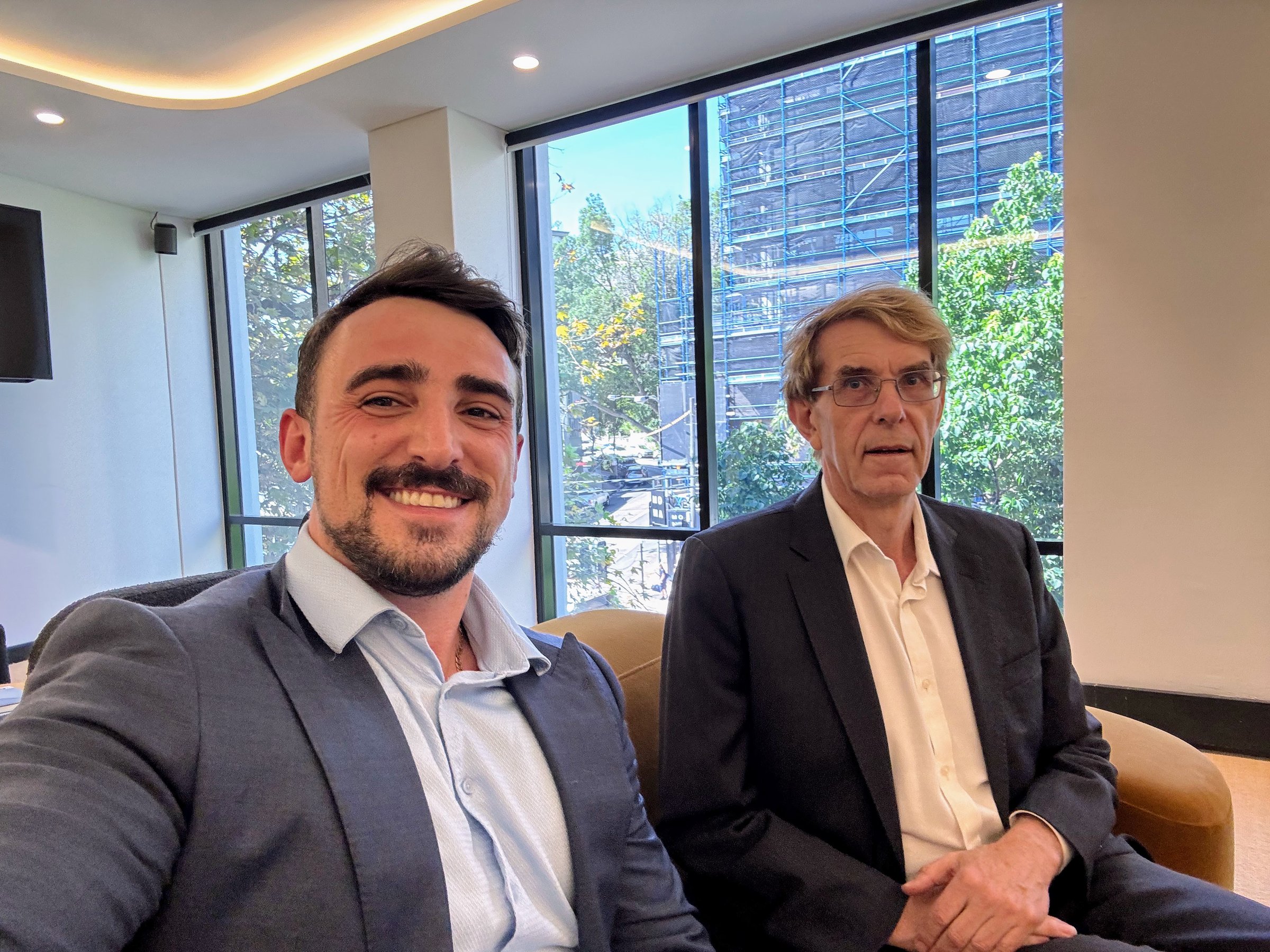
Paul Monsted
Commercial lead & project management. Founded Australia's first online payment technology company. Author of textbook on the Company Secretary.
George Tulloch
Acoustic engineering and AI development. A technologist raised in an Australian solar start-up, now leading Noizend's sound-field modelling and active noise control.
Early, and moving.
Backed by grants and support from the NSW Government and the City of Sydney.
Research partnership with UTS's Centre for Audio, Acoustics and Vibration.
Accepted into NVIDIA's Inception program, with a technology donation from Autodesk's Technology Impact Program.
Selected for the Supercharge Australia clean-tech incubator, and pitched in the final week of Blackbird Giants Cohort 11.
Made formal submissions to the NSW and Commonwealth inquiries into data centres, and featured on ABC's Dr Karl's How Things Work discussing low-frequency noise research.
Approached by major Australian and international energy companies for pilot noise-reduction work at battery storage sites.







Interested in investing in Noizend?
We're not running an open raise on this page. If you'd like to learn more about Noizend and discuss investing, get in touch directly.
This page is general information about Noizend and does not constitute an offer, invitation or recommendation to acquire securities or any financial product, and should not be relied on as investment or financial advice.

Reducing noise pollution and protecting people at home, at work, and in their community, using Physics AI.


© 2026 Noizend Pty Ltd · Sydney, Australia